
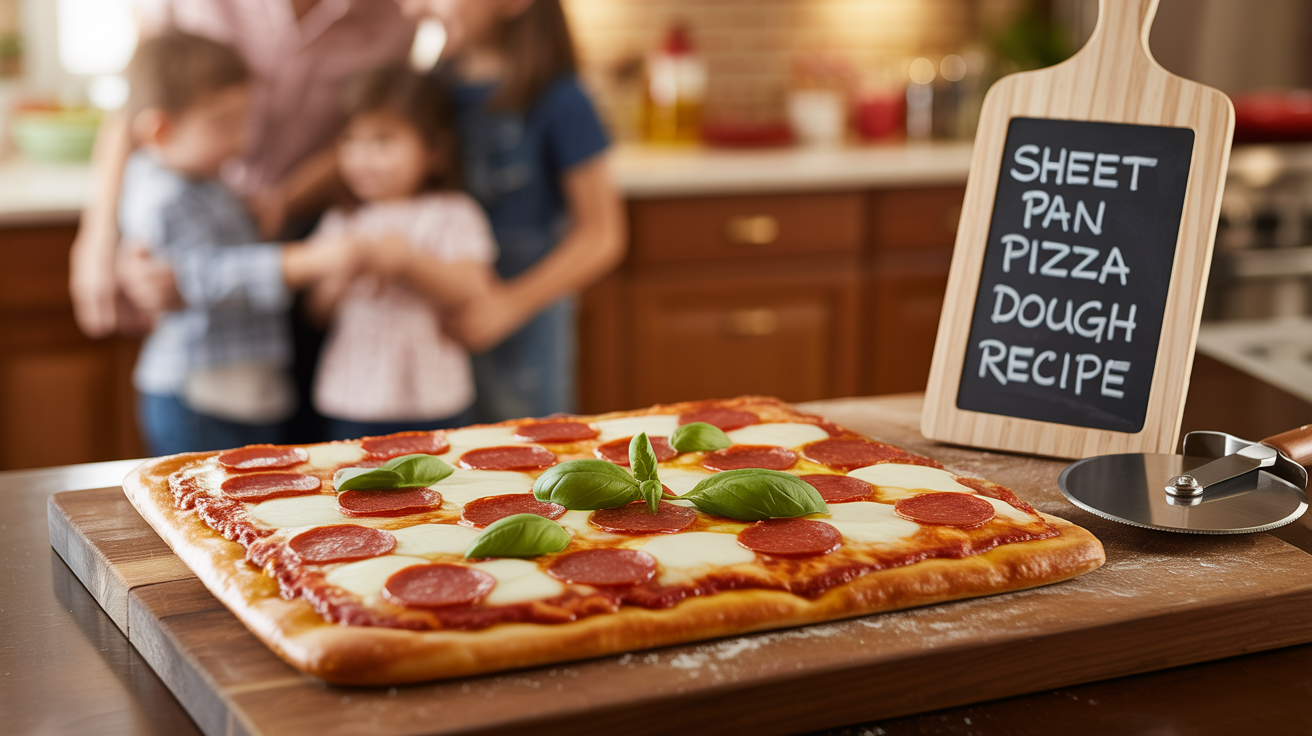
Sheet Pan Pizza Dough Recipe – Crispy, Chewy & Perfect for Sharing
There’s a special kind of joy in making pizza at home. The smell of dough baking, the bubbling cheese, the freedom to load up your favorite toppings—it’s magic. But let me tell you something: not every night calls for stretching out delicate Neapolitan rounds or firing up a pizza stone. Some nights, you just want comfort. Something family-style. Something you can serve in big, golden squares straight from the oven.
That’s where the sheet pan pizza dough recipe comes in.
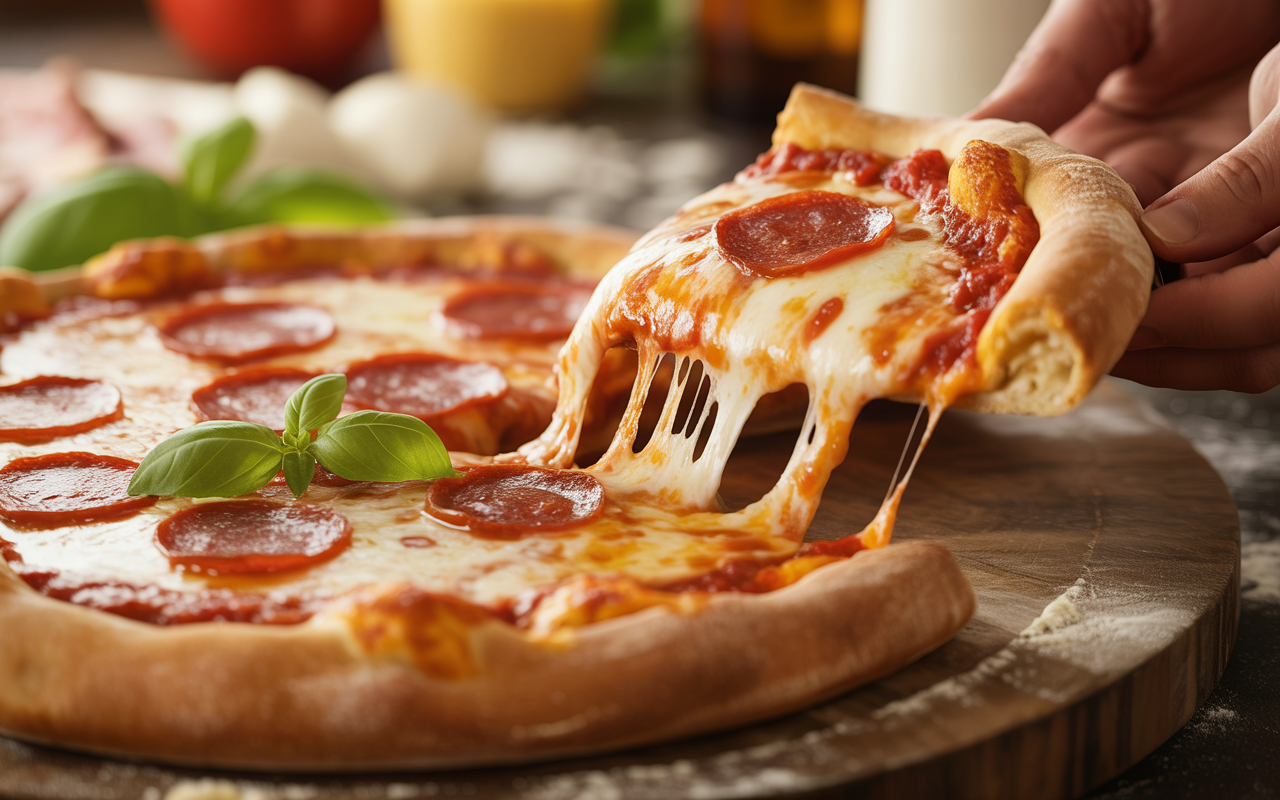
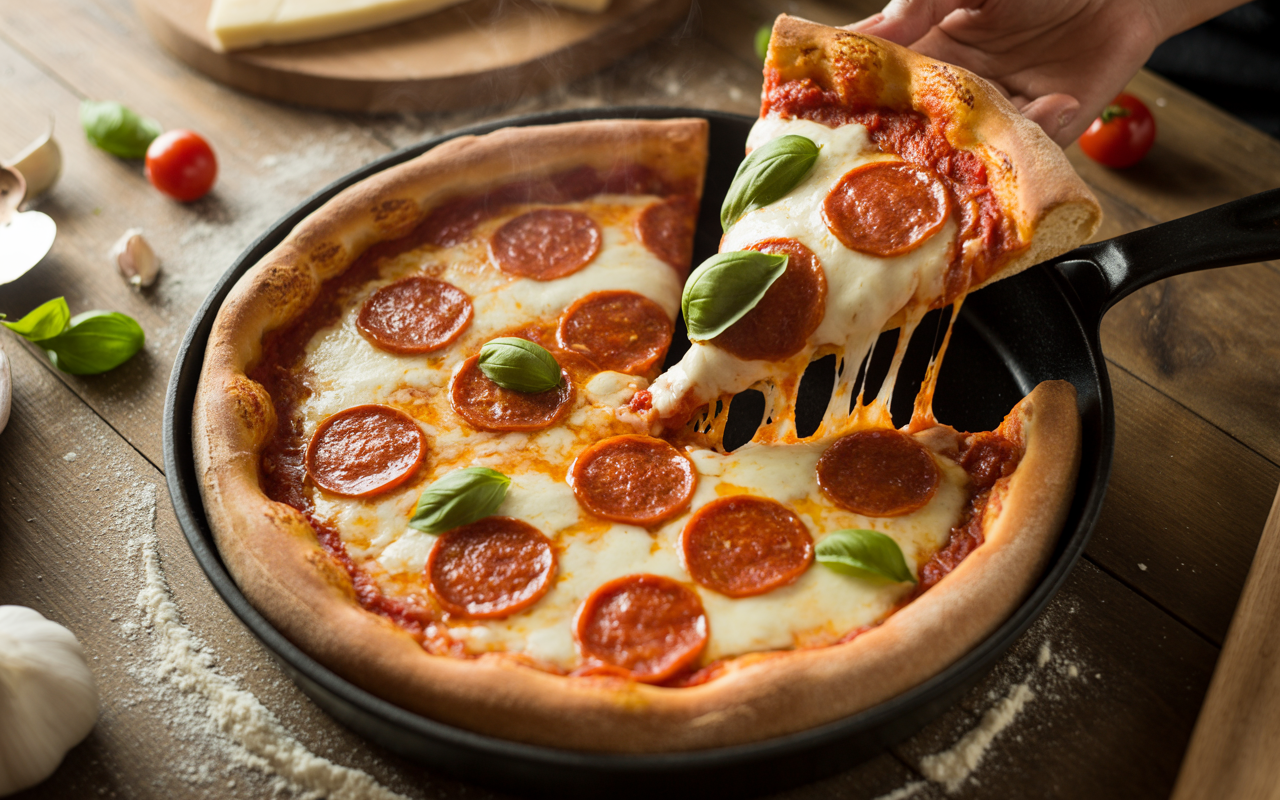
This isn’t just an easier method—it’s its own glorious style of pizza. Think airy but chewy crust, crispy edges kissed by olive oil, and plenty of surface area for cheese and toppings. Perfect for weeknight dinners, game-day gatherings, or when you’re craving that nostalgic pizzeria pan pizza flavor.
I’ve spent years tweaking this recipe, adjusting hydration, experimenting with rise times, and finding the balance between chewy and crispy. Today, I’m sharing the version that never fails me. Let’s get baking.
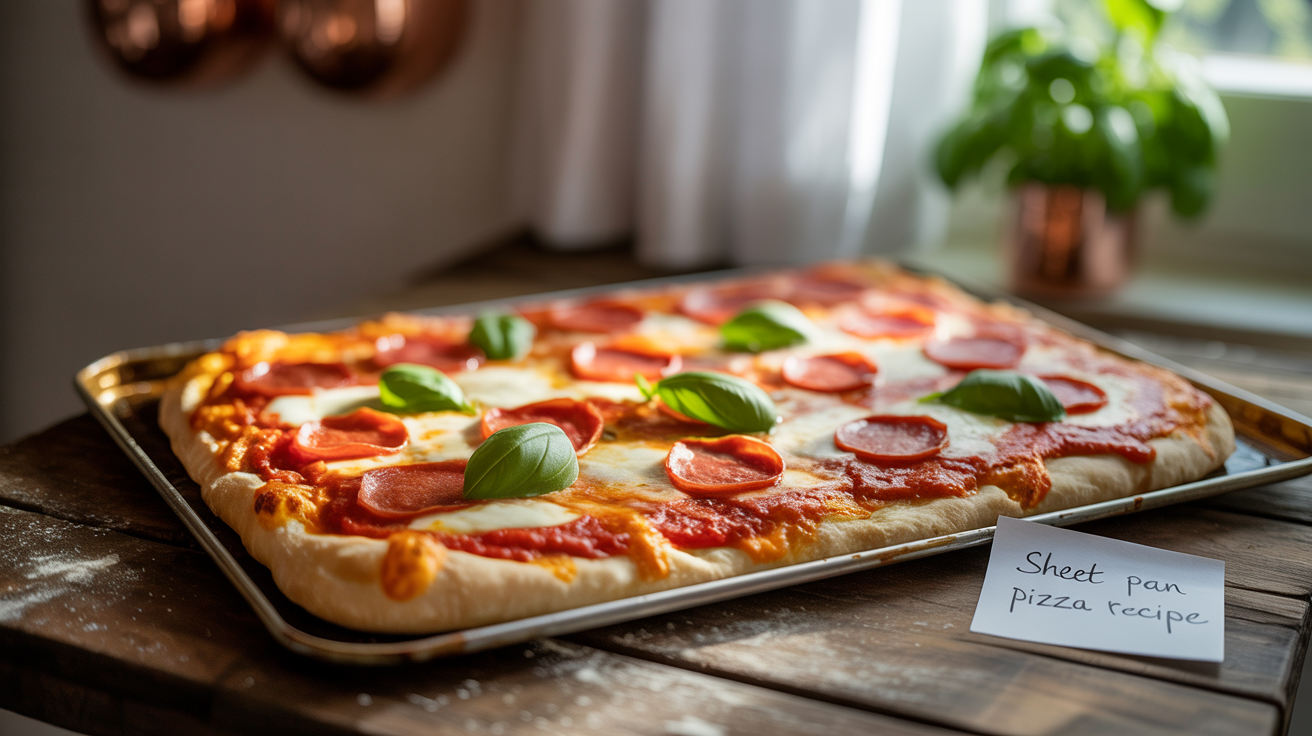
Ingredients You’ll Need
Here’s the beauty of this recipe: simple, honest ingredients that you probably already have in your kitchen.
| Ingredient | Measurement | Notes |
|---|---|---|
| All-purpose flour (or bread flour) | 4 cups (500 g) | Bread flour gives extra chew |
| Warm water (95°F / 35°C) | 1 ½ cups (360 ml) | Not hot, just warm to activate yeast |
| Active dry yeast | 2 ¼ tsp (1 packet / 7 g) | Instant yeast also works |
| Olive oil | ¼ cup (60 ml) | Plus extra for greasing pan |
| Sugar | 1 tbsp | Feeds the yeast |
| Salt | 2 tsp | Balances flavor |
| Optional: garlic powder | ½ tsp | For extra depth |
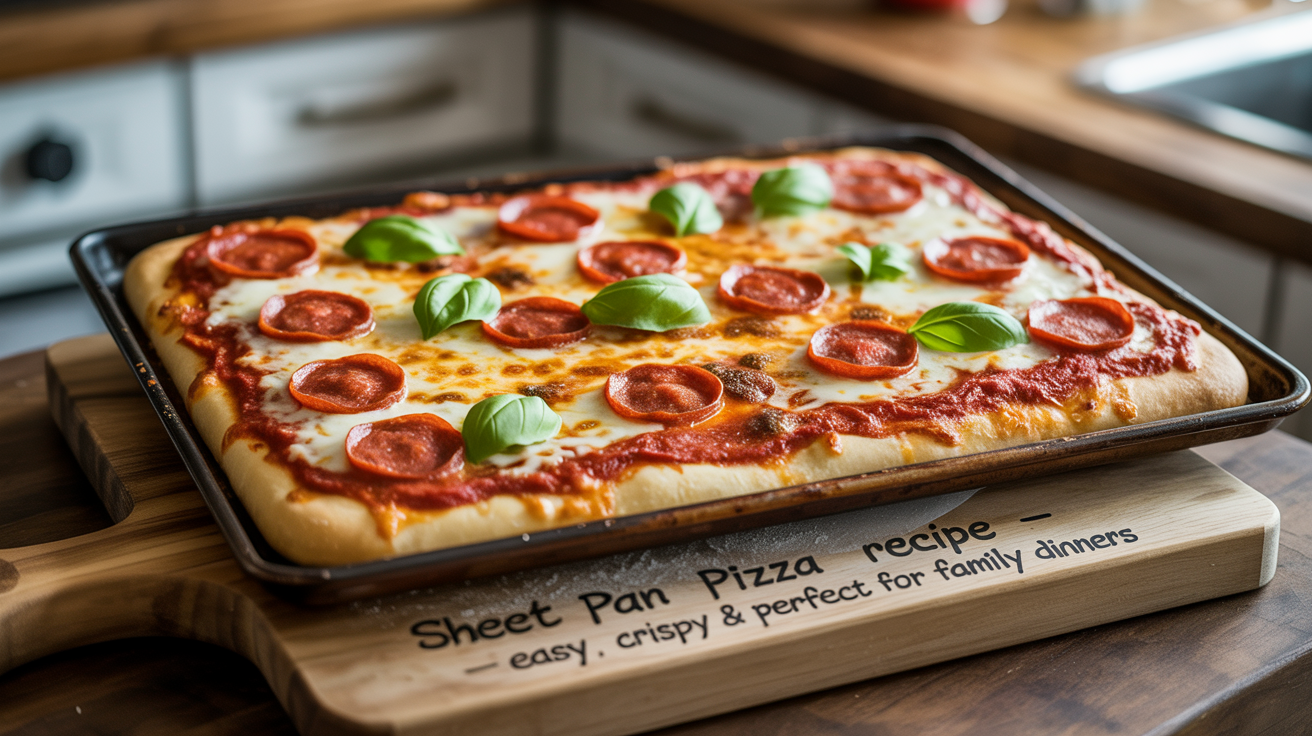
Step-by-Step Instructions
Step 1 – Activate the yeast
In a bowl, mix warm water, sugar, and yeast. Let it sit for about 5–7 minutes until foamy. This tells you the yeast is alive and ready.
Step 2 – Mix the dough
In a large mixing bowl, combine flour and salt. Pour in the yeast mixture and olive oil. Stir with a wooden spoon until it comes together, then knead by hand for 8–10 minutes (or 5 in a stand mixer). The dough should be smooth, elastic, and slightly tacky.
Step 3 – First rise
Place the dough in a lightly oiled bowl, cover with a towel, and let it rise at room temperature for 1–2 hours, or until doubled in size.
Step 4 – Prep the sheet pan
Generously oil a standard half-sheet pan (18×13 inch). This not only prevents sticking but also creates that golden, crispy bottom crust.
Step 5 – Stretch the dough
Transfer the risen dough onto the pan. Gently press and stretch it out with your fingertips until it reaches the edges. If it resists, let it rest for 5–10 minutes, then continue. Don’t force it—the dough relaxes as it rests.
Step 6 – Second rise
Cover the pan loosely with plastic wrap and let the dough rise for another 30 minutes. This gives you a puffier, lighter crust.
Step 7 – Prebake (optional but recommended)
For an extra crispy bottom, bake the naked dough in a 475°F (245°C) oven for 7–8 minutes before adding toppings. This prevents soggy centers.
Step 8 – Sauce, cheese & toppings
Spread on your pizza sauce, sprinkle mozzarella generously, and pile on your favorite toppings—pepperoni, peppers, mushrooms, onions, or keep it classic with Margherita simplicity.
Step 9 – Bake to perfection
Bake at 475°F (245°C) for 15–20 minutes until the cheese is bubbly and golden, and the edges are crisp.
Step 10 – Slice & enjoy
Let the pizza rest for 3–5 minutes, then cut into big squares. Serve straight from the pan—family style.
Why Sheet Pan Pizza Works So Well
- Effortless: No pizza stone, no peel, no stress.
- Crowd-friendly: Perfect for feeding a family or group.
- Crispy + chewy balance: The oiled pan gives a crunchy bottom, while the interior stays soft.
- Customizable: Divide the pan into sections for different toppings—everyone gets what they love.
Tips & Tricks for the Best Sheet Pan Pizza
- Use bread flour if you can. It adds chewiness thanks to higher protein.
- Don’t skimp on the olive oil. It’s the secret to that golden, almost fried crust.
- Rest the dough if it fights back. Dough has “memory” and needs a pause to relax.
- Prebake for saucy toppings. Prevents soggy crusts when using fresh tomatoes or lots of veggies.
- Experiment with rise time. Longer, slower rises (like overnight in the fridge) deepen flavor.
- Try garlic oil. Brush the edges of the crust with garlic-infused olive oil before baking for heavenly flavor.
- Slice into squares, not wedges. It’s sheet pan tradition—and perfect for grabbing with your hands.
FAQ Section
Q: Can I make the dough ahead of time?
Absolutely. After the first rise, refrigerate the dough overnight. The cold fermentation enhances flavor.
Q: Can I freeze sheet pan pizza dough?
Yes! Wrap in plastic and freeze after the first rise. Thaw in the fridge overnight before using.
Q: What size sheet pan works best?
A standard half-sheet (18×13 inch) is perfect. For thicker crust, use a smaller pan.
Q: Do I need to prebake the dough?
Not strictly, but it helps if you’re using heavy toppings or lots of sauce.
Q: Can I use whole wheat flour?
Yes, though I recommend replacing just 25–30% of the flour with whole wheat for best texture.
Final Thoughts
Pizza nights at home should feel fun, not stressful. And that’s why I keep coming back to this sheet pan pizza dough recipe. It’s forgiving, flexible, and guaranteed to win over both kids and adults.
The crust comes out perfectly golden at the edges, with that irresistible balance of crunch and chew. It’s the kind of pizza that begs to be shared—laid out on the table, everyone reaching in for a square.
If you’ve only ever made round pizzas, give this a try. I promise, once you taste the crispy edges and how much easier it is to feed a crowd, sheet pan pizza will earn a permanent spot in your kitchen rotation.
Buon appetito, amici! 🍕
See Also: San Marzano Pizza Sauce Recipe | Authentic Italian Flavor at Home