

There are days when tomato sauce just doesn’t cut it. Days when I crave something greener, brighter, and full of bold Mediterranean aroma. That’s when I reach for one of my all-time favorites: pesto pizza.
Oh yes.
If classic Margherita is the heart of Italian pizza, then pesto pizza is its vibrant, herb-filled soul. It’s a pizza that smells like a walk through a Ligurian basil field and tastes like warm summer nights by the sea. If you’ve never made pizza with pesto before, prepare to meet your new obsession.
This recipe is bold.
It’s fragrant.
It’s creamy, crispy, nutty, cheesy, and absolutely unforgettable.
And today, I’m giving you not just any pesto pizza recipe — but the one I’ve perfected after years of experimenting with dough hydration, basil varieties, cheese ratios, and baking times. Whether you’re looking for homemade pesto pizza, basil pesto pizza, white sauce pizza alternatives, or just a fresh twist on Italian pizza nights, this guide will become your go-to.
Let’s bring Italy right into your kitchen.
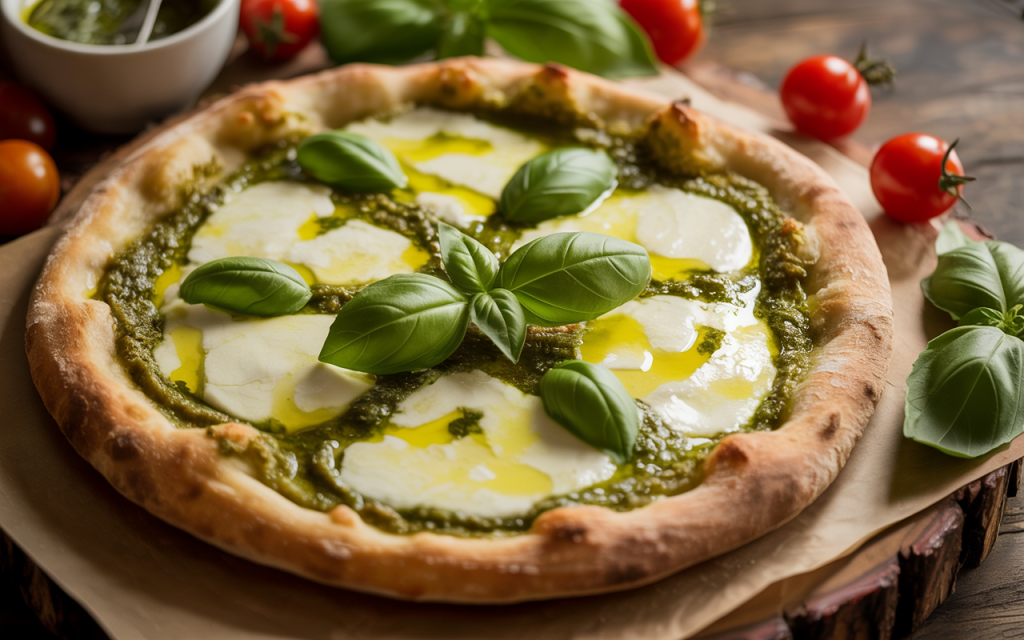
🍕 Why Pesto Pizza Is So Special
Most pizzas depend on tomato sauce for their identity, but pesto pizza flips that idea completely. Instead of acidity, you get richness. Instead of tang, you get fragrance. Instead of sweetness, you get depth.
With a great pesto — bright green, silky, bursting with basil and Parmigiano — you’re already halfway to a masterpiece.
And when you add:
- Melted mozzarella
- Creamy burrata or ricotta
- Toasty pine nuts
- A delicate golden crust
You get a pizza that feels both rustic and refined.
It’s Italy on a plate. It’s comfort food with personality. It’s one of the best pizzas you will ever make at home.
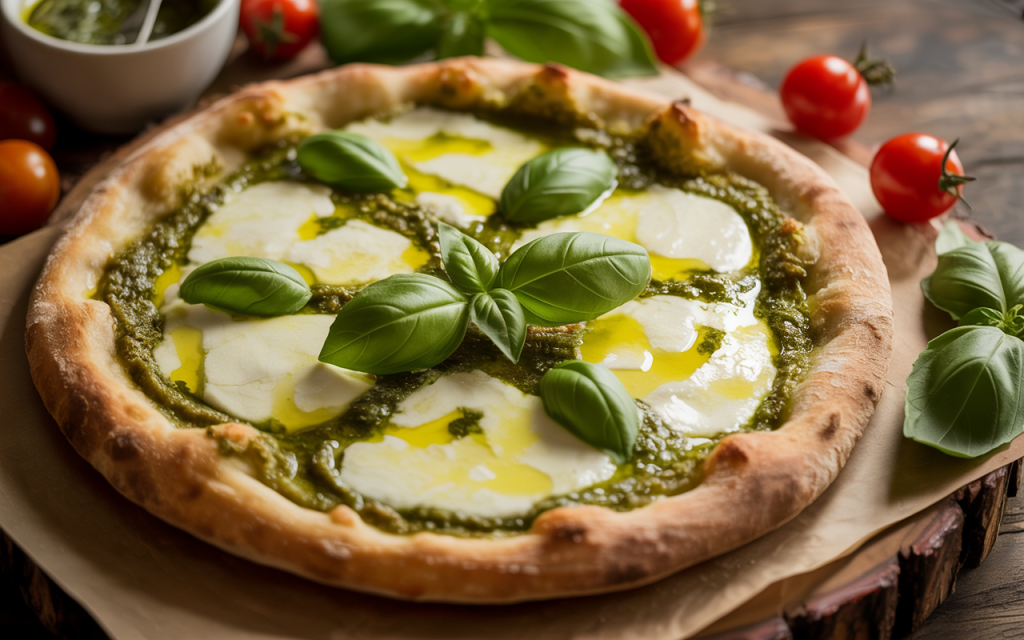
🧾 Ingredients for the Best Pesto Pizza (Full Table)
Below are the exact ingredients and measurements for a 12-inch pesto pizza with classic Italian flavor.
Pizza Dough (Traditional Italian Style)
| Ingredient | Amount |
|---|---|
| Tipo 00 flour (or bread flour) | 350 g (about 2 ¾ cups) |
| Lukewarm water | 225 ml |
| Active dry yeast | 1 tsp |
| Salt | 1 tsp |
| Olive oil | 1 tbsp |
| Sugar (optional) | ½ tsp |

Homemade Pesto Sauce
(You can use store-bought pesto, but homemade pesto transforms the entire pizza.)
| Ingredient | Amount |
|---|---|
| Fresh basil leaves | 2 cups (packed) |
| Pine nuts | ¼ cup |
| Garlic | 1 clove |
| Parmigiano Reggiano | ½ cup (freshly grated) |
| Extra-virgin olive oil | ½ cup |
| Salt | ½ tsp |
| Lemon juice | 1 tsp (optional, keeps color bright) |
Pizza Toppings
| Ingredient | Amount |
|---|---|
| Shredded mozzarella | 1 ½ cups |
| Fresh mozzarella slices (optional) | 4–6 slices |
| Ricotta or burrata | ½ cup |
| Cherry tomatoes (halved) | 1 cup |
| Pine nuts (for topping) | 1–2 tbsp |
| Fresh basil leaves | handful |
| Freshly cracked pepper | to taste |
👩🍳 Step-by-Step Instructions – Authentic Italian Pesto Pizza
Step 1: Prepare the Pizza Dough (10 minutes)
In a bowl, combine:
- warm water
- yeast
- sugar
Let it rest for 3–5 minutes until slightly foamy.
This ensures your dough rises beautifully and gives that classic Italian texture — chewy, soft, and strong enough to stretch thinly.
In another bowl:
- Add flour
- Add salt
Gradually pour in the yeast mixture and olive oil.
Mix until a sticky dough forms.
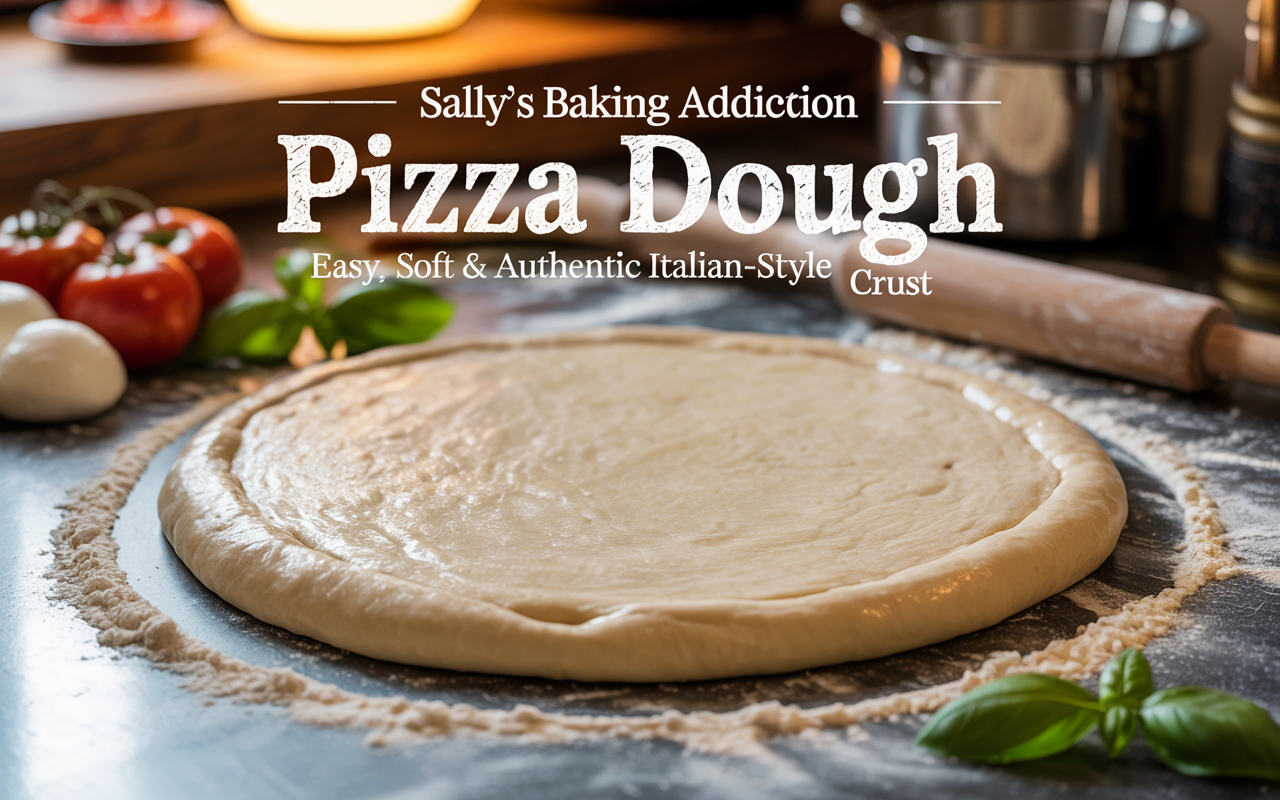
Transfer onto a lightly floured surface and knead for 8–10 minutes until smooth and elastic. The dough should bounce when pressed with a fingertip.
Step 2: First Rise (1 hour)
Place the dough in a lightly oiled bowl, cover with a damp cloth, and let it rise until doubled.
This step is essential for:
- light crust
- air pockets
- easy stretching
Step 3: Make the Homemade Pesto (5 minutes)
In a food processor, combine:
- basil
- pine nuts
- garlic
- Parmigiano
- a pinch of salt
Pulse while slowly streaming in olive oil.
You want a thick, luxurious pesto — shiny but still textured.
The aroma will feel like you’ve just crushed basil between your fingers.
Chef tip: Never over-blend pesto. It heats up and turns bitter.
Step 4: Shape the Pizza Dough (5 minutes)
After rising, punch the dough gently to release gas.
Shape into a ball and let it rest 10 minutes.
Then stretch it using only your fingertips — never a rolling pin.
Rolling pins destroy the air bubbles you want in an authentic Italian crust.
Stretch until it becomes a 12-inch round with a slightly thicker edge.
Step 5: Preheat Your Oven to Maximum Heat
Pizza should bake fast and hot.
- Pizza stone: 480–500°F (250–260°C)
- Baking sheet: 450°F (230°C)
If you have a pizza stone, put it in while the oven preheats.
You want it scorching hot.
Step 6: Assemble the Pesto Pizza
Place your stretched dough on parchment or a pizza peel.
Now the magic:
Spread the pesto generously
Use 3–4 tablespoons.
Too much will make the pizza heavy; too little and you’ll miss the beautiful basil flavor.
Add cheeses
- A layer of shredded mozzarella
- A few slices of fresh mozzarella
- Dollops of ricotta or burrata
Add cherry tomatoes
They add sweet acidity that balances the rich pesto.
Sprinkle pine nuts
For crunch and aroma.
Step 7: Bake to Perfection (8–12 minutes)
Slide your pizza into the hot oven.
Watch the transformation:
- The crust puffs and turns golden
- The cheese melts into creamy pools
- The tomatoes blister
- The pine nuts toast
The smell?
Heaven.
Pure, basil-filled, cheesy heaven.
Step 8: Finishing Touches
As soon as it comes out:
- Add fresh basil leaves
- Drizzle a little olive oil
- Add cracked pepper
These finishing touches brighten everything.
🌿 Why Pesto Pizza Works So Well (Cooking Science + Italian Tradition)
Pesto pizza is more than “pizza with green sauce.”
There are reasons it’s delicious:
1. Fat + Fresh Herbs = Flavor Explosion
Basil releases aroma molecules only when blended with fat.
Olive oil → pulls out basil aroma
Cheese → enhances mouthfeel
2. No Tomato Means Better Cheese Flavor
Tomato sauce dominates.
Pesto lets cheese shine.
3. Pine Nuts Give Texture & Sweetness
They balance basil bitterness.
4. Basil + Garlic + Parmesan = Natural Umami
This is why pesto pizza tastes so satisfying.
5. The Herbs Stay Fresh in High Heat
Pesto protects the dough from burning or drying.
🌟 Tips & Tricks for the Perfect Pesto Pizza
1. Always Make Your Own Pesto
Store-bought pesto is dull, oily, and often brownish.
Homemade pesto is vibrant, fresh, and aromatic.
2. Do Not Overload Toppings
Pesto is rich.
Too many toppings → greasy result.
3. Toast Your Pine Nuts
It intensifies flavor dramatically.
4. Add Acid for Balance
Cherry tomatoes or lemon zest help cut richness.
5. Use a Hot Oven
The hotter the oven, the better the crust.
6. Choose High-Quality Olive Oil
Poor oil = bitter pesto.
Good oil = silky, fragrant, unforgettable.
7. Stretch, Don’t Roll
Rolling kills air bubbles.
Stretching gives you the authentic Neapolitan look.
8. Finish With Fresh Basil
Fresh herbs wilt fast, so add after baking.
❓ FAQ – Pesto Pizza Everything You Wanted to Know
1. Can I use store-bought pesto?
Yes, but choose a high-quality refrigerated brand.
Homemade is much better.
2. Can I make pesto pizza without pine nuts?
Absolutely!
Try:
- walnuts
- almonds
- cashews
- pistachios
Or skip nuts entirely.
3. Can pesto go directly on raw pizza dough?
Yes!
Pesto is thick enough to serve as a base sauce.
4. What cheese pairs best with pesto pizza?
Top choices:
- mozzarella
- burrata
- ricotta
- parmesan
- pecorino romano
Avoid salty cheeses like feta — they overpower basil.
5. Can I freeze pesto pizza?
Unbaked: yes
Baked: possible, but not ideal
6. How do I prevent pesto from turning brown?
Add lemon juice or store covered with olive oil.
❤️ Final Thoughts: Pesto Pizza Will Change Your Pizza Nights Forever
I’ve made hundreds of pizzas in my life.
From Neapolitan classics to gourmet white pizzas… but pesto pizza always has a special place in my heart. It’s bright, aromatic, and full of Italian soul. The kind of pizza you make when you want something fresh and different, yet deeply comforting.
See Also: The Ultimate Recipe for Deep Pan Pizza | Thick Crust, Cheesy, Authentic Italian-Style Pan Pizza